
Concerts Reviews
LIVE REVIEW: Lost Americana Finds a Home in Vancouver as MGK Hits With Fire, Heart, and Volume
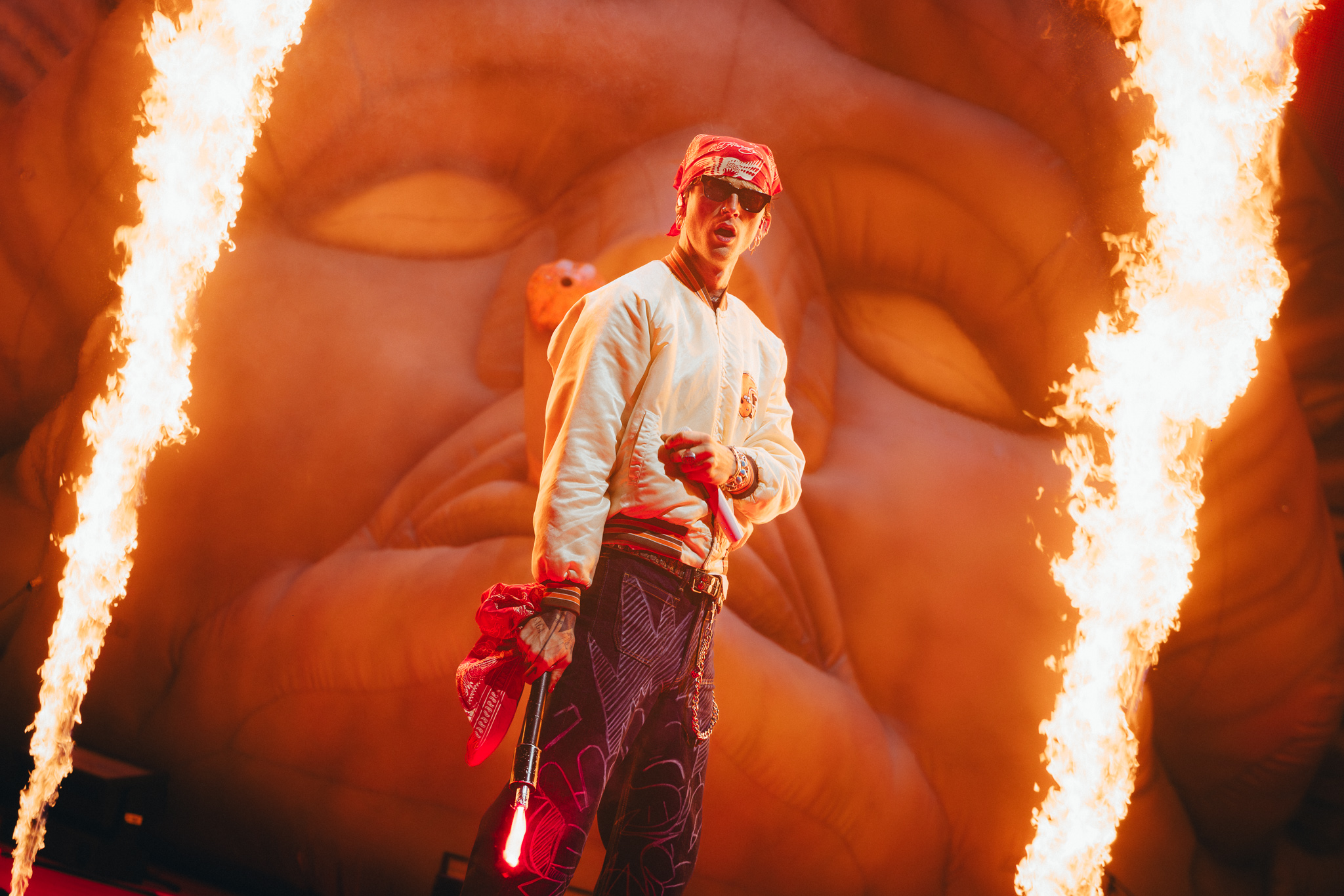
Machine Gun Kelly has spent the better part of a decade refusing to stay in one musical lane, and his stop at Rogers Arena in Vancouver on June 29 proved that he’s no longer interested in explaining himself. The Lost Americana Tour doesn’t try to convince anyone that rap, pop-punk, alternative rock, country influences, and arena spectacle belong together. It simply throws them all on stage and dares you to keep up.
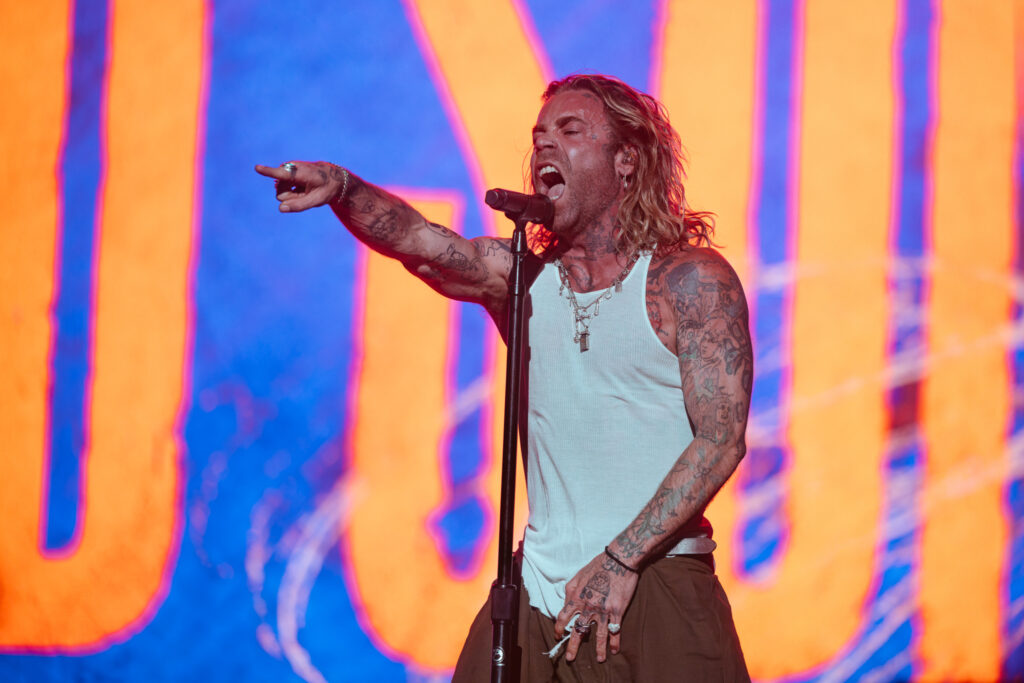
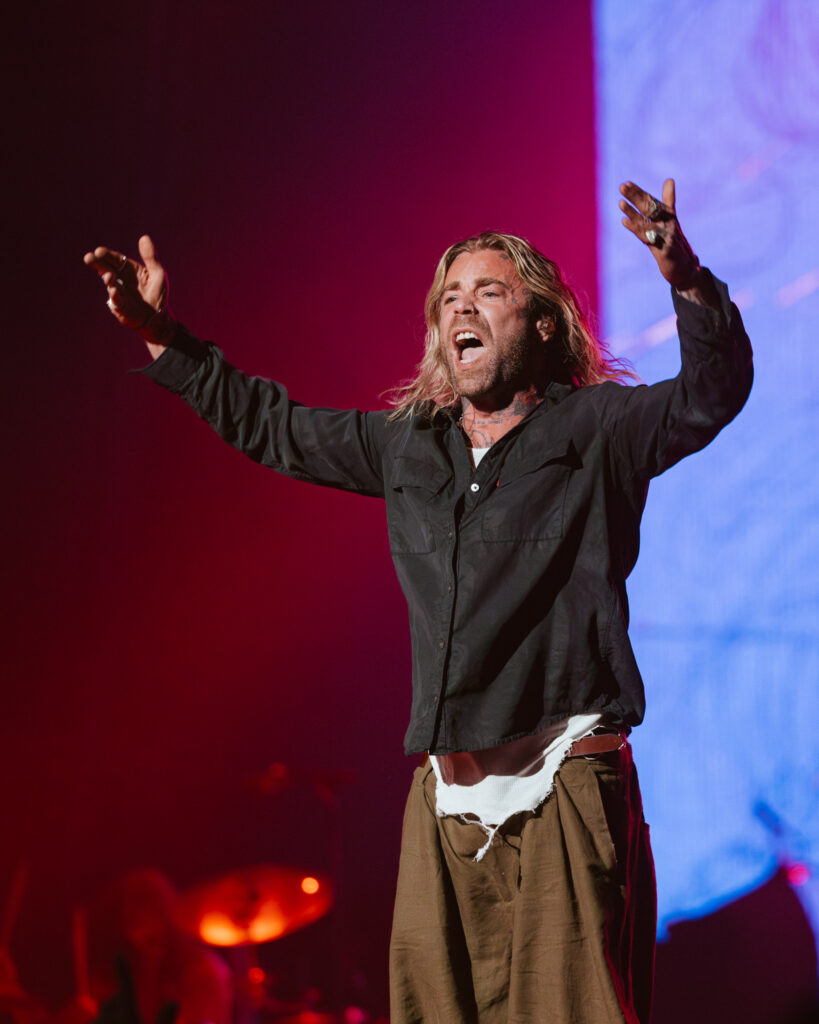
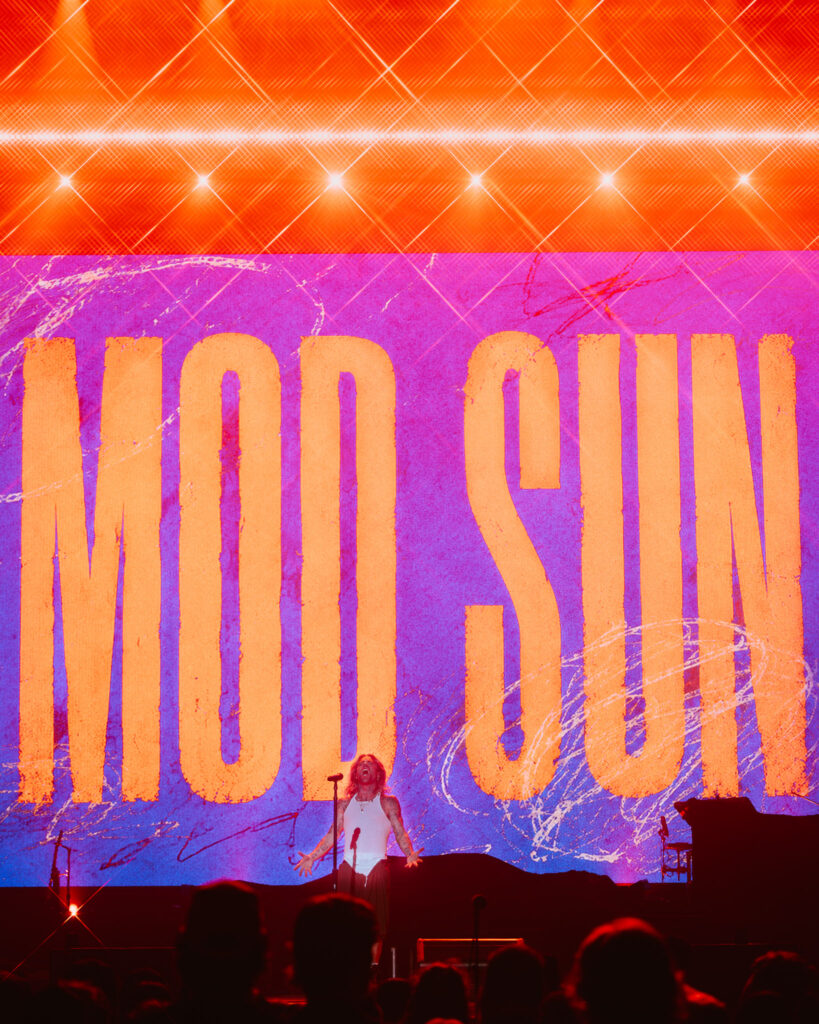
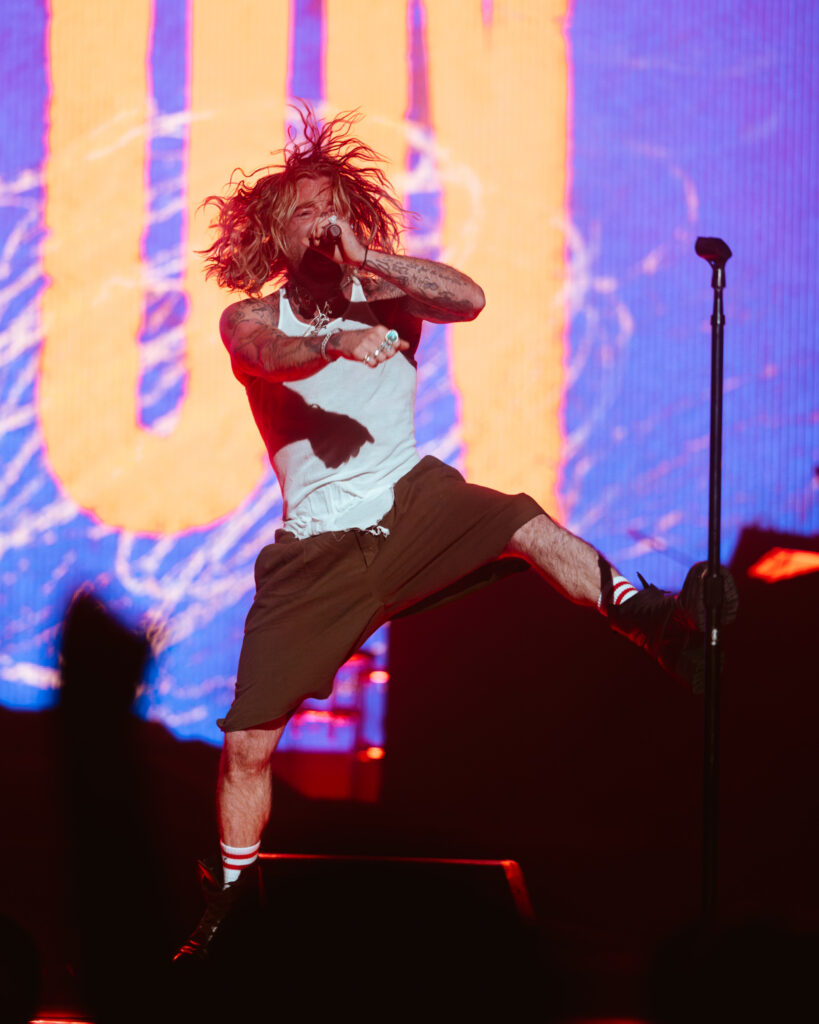
Before MGK appeared, Emo Nite warmed up the crowd with the kind of party they’re know for. Mod Sun followed with a set full of his usual infectious energy and charisma, bouncing between pop-punk hooks and hip-hop swagger while keeping the arena moving before the night’s main event.
One noticeable absence lingered over the evening. MGK explained more than once that his usual tourmate, Wiz Khalifa, had been unable to cross the border and wouldn’t be performing in Vancouver. He admitted it added pressure to his own set, since Wiz normally joins him during several songs, but hoped the crowd was still ready for a great night. Judging by the roar that followed, Rogers Arena wasn’t about to let him carry that weight alone.
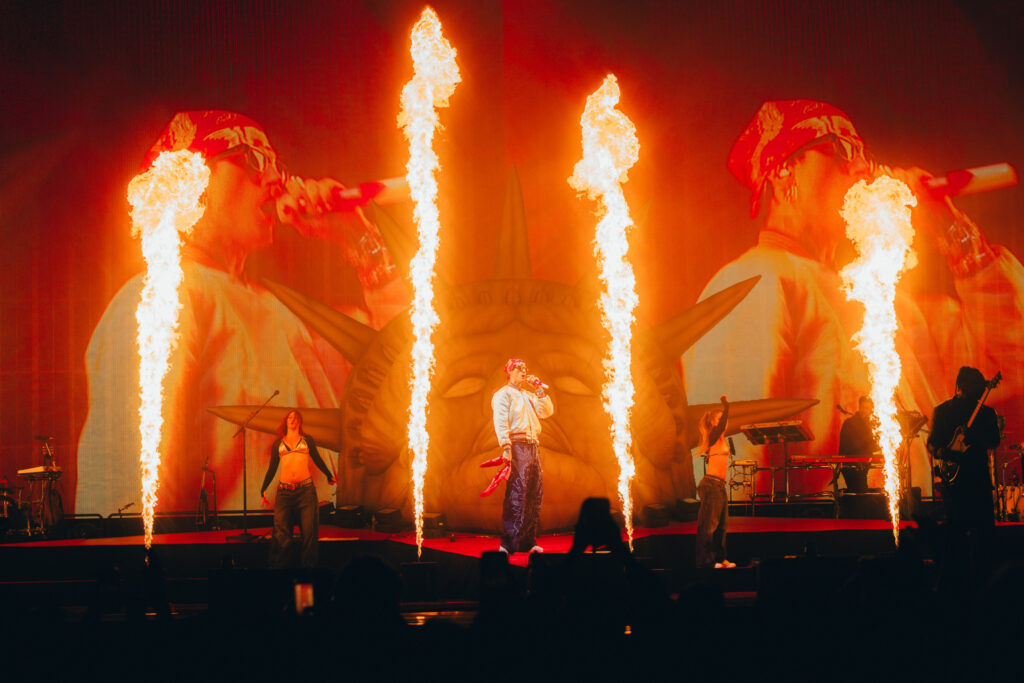
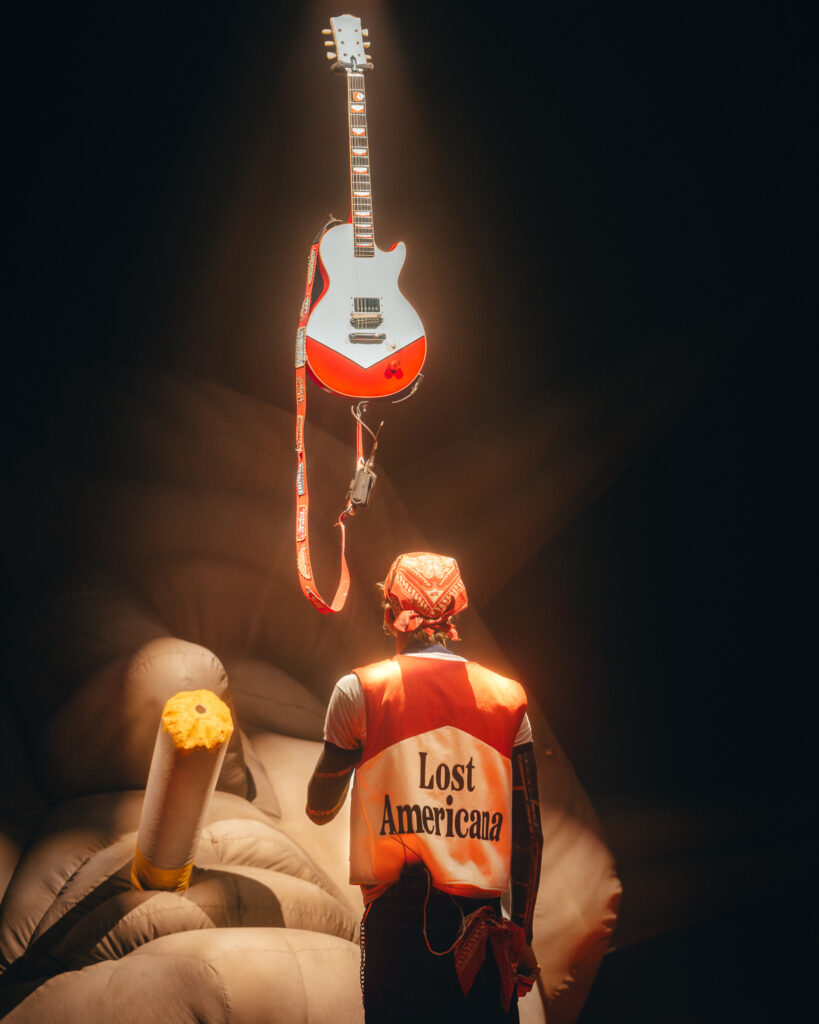
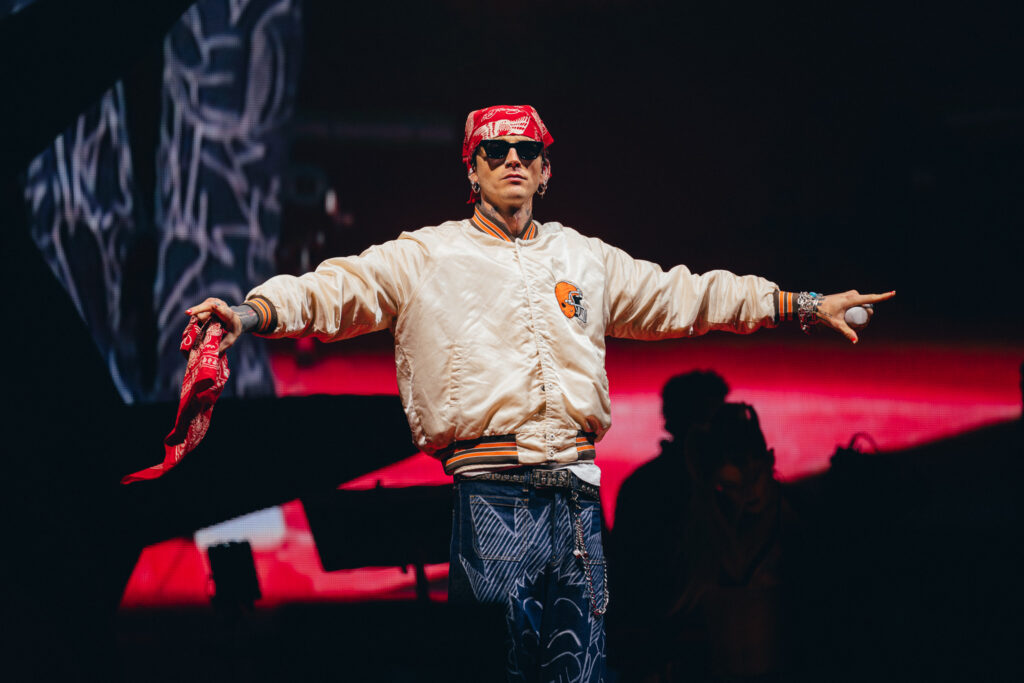
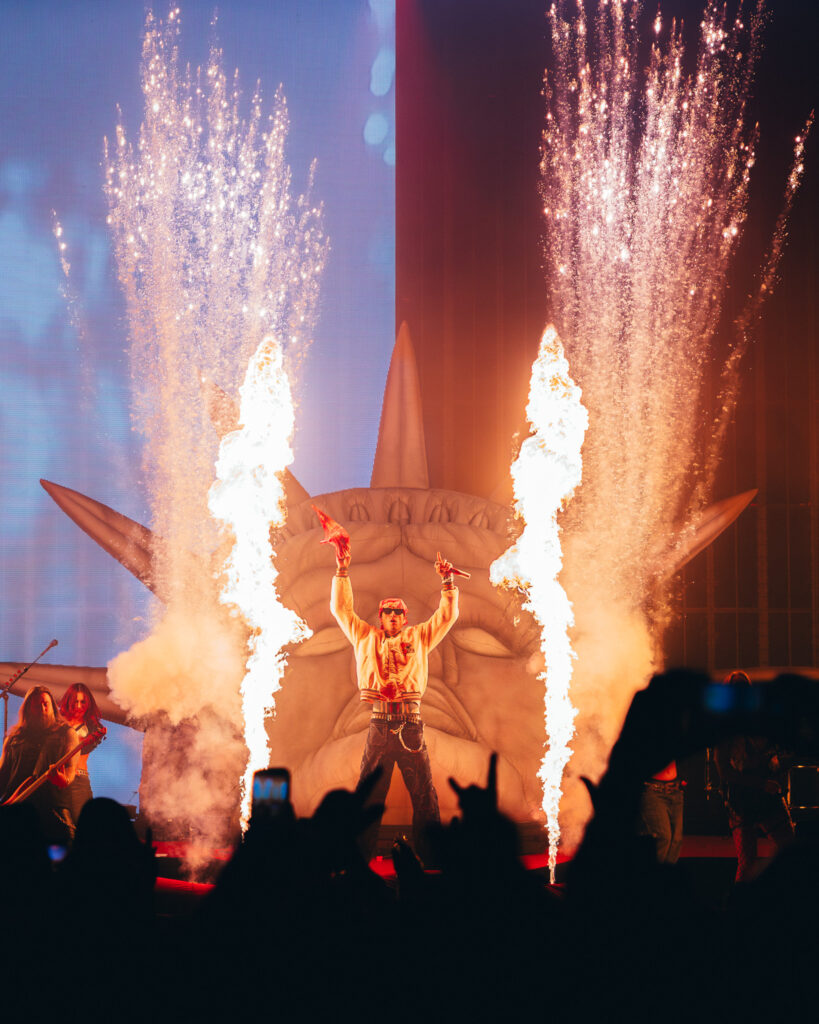
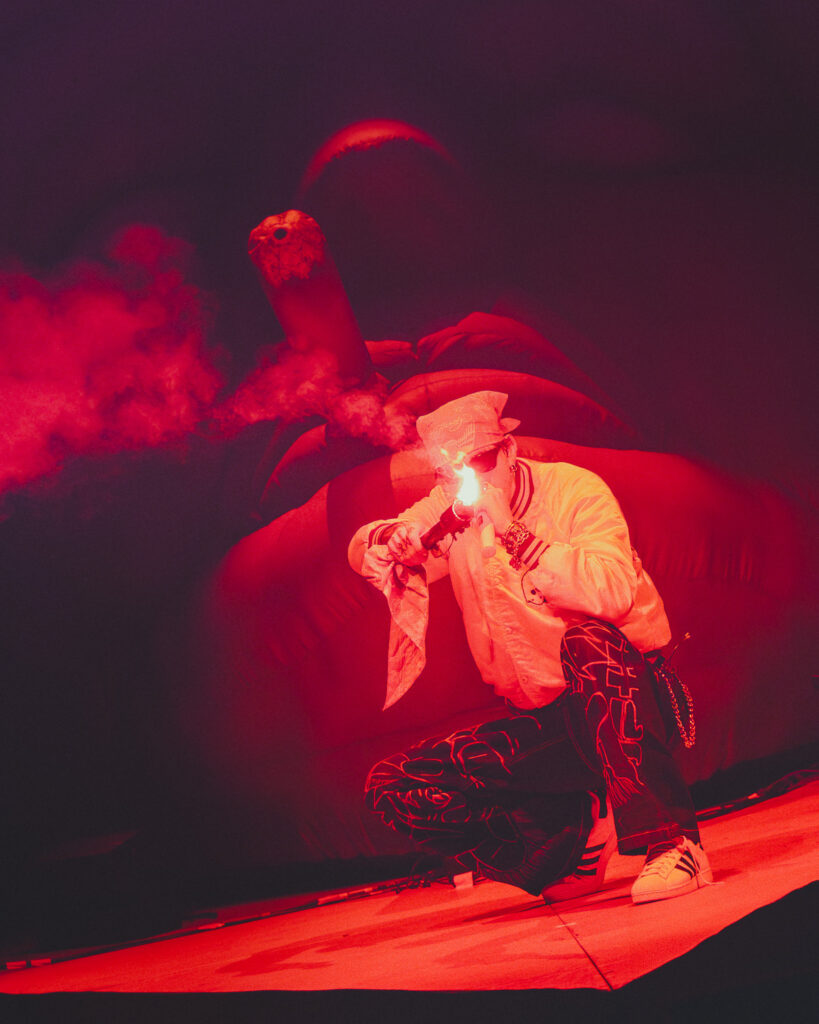
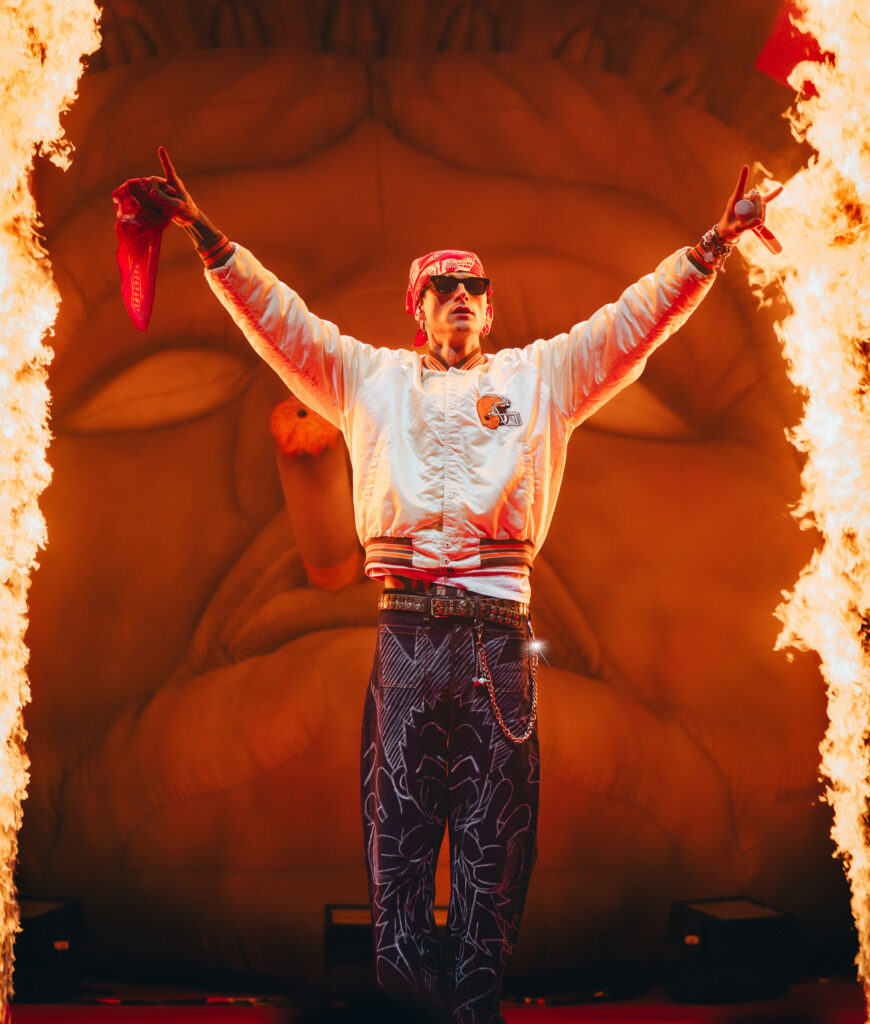
The stage itself immediately set the tone. Dominating the production was an enormous Statue of Liberty head, complete with a cigarette hanging from its mouth beneath the glowing “Lost Americana” sign. It was a striking visual that matched the album’s themes of rebellion and search for identity. It looked fantastic, especially once the pyrotechnics, towering video screens, and relentless lighting package came to life.
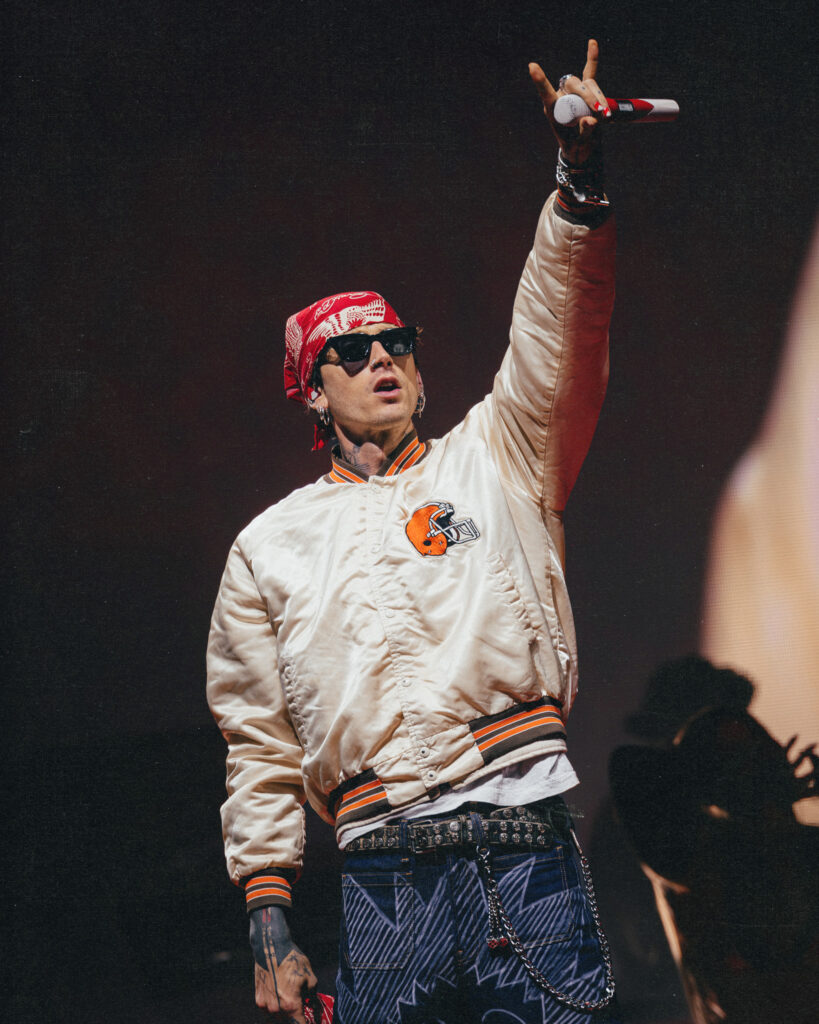
MGK emerged from the Kabuki drop to open with “FIX UR FACE” and “Outlaw Overture,” wasting little time before launching into newer material including “Starman.” Those songs carried the early stretch of the show. Lost Americana borrows from every chapter of his career, and that’s exactly how the concert unfolded. Early in the set, he welcomed American singer-songwriter Honestav to the stage for a surprise duet that drew one of the night’s loudest reactions. It was an unexpected moment that fit perfectly with the free-flowing nature of the show.
Between songs, MGK dropped the rockstar persona long enough to share something more personal. Despite performing since he was 16 years old, he admitted he still gets nervous before every show, wondering if people will actually show up. Looking around Rogers Arena, he said it still amazes him that after playing amphitheatres for months on this tour, he now gets to headline arenas like this one.
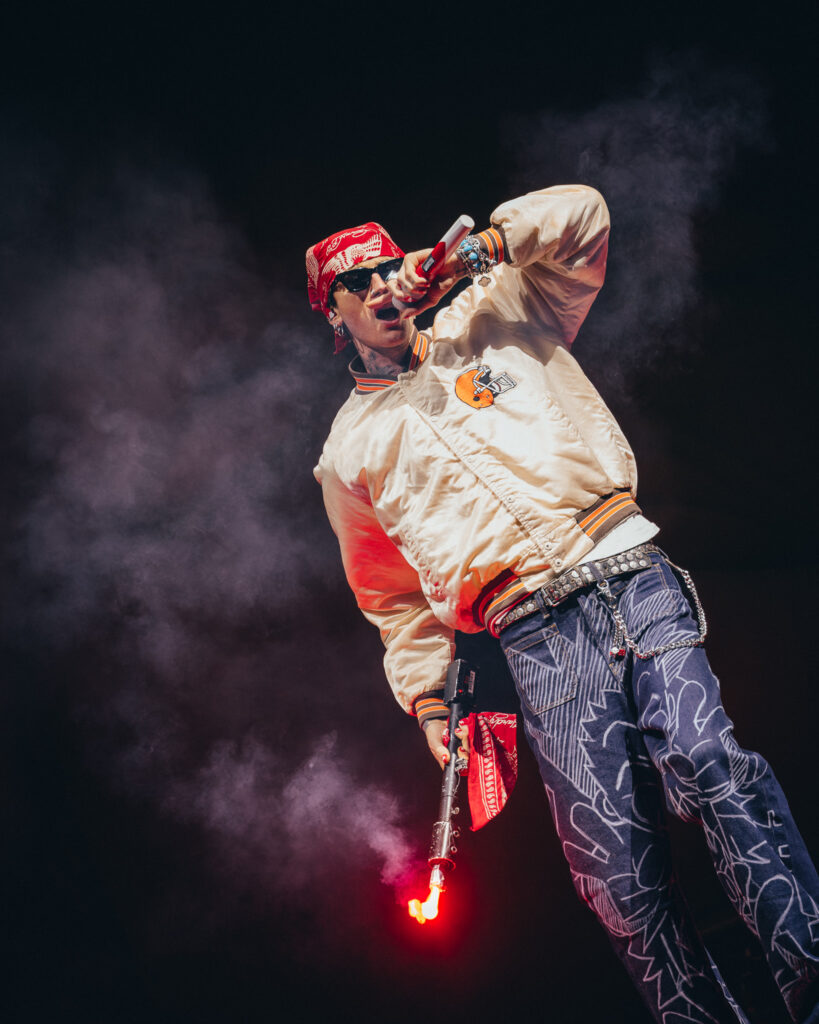
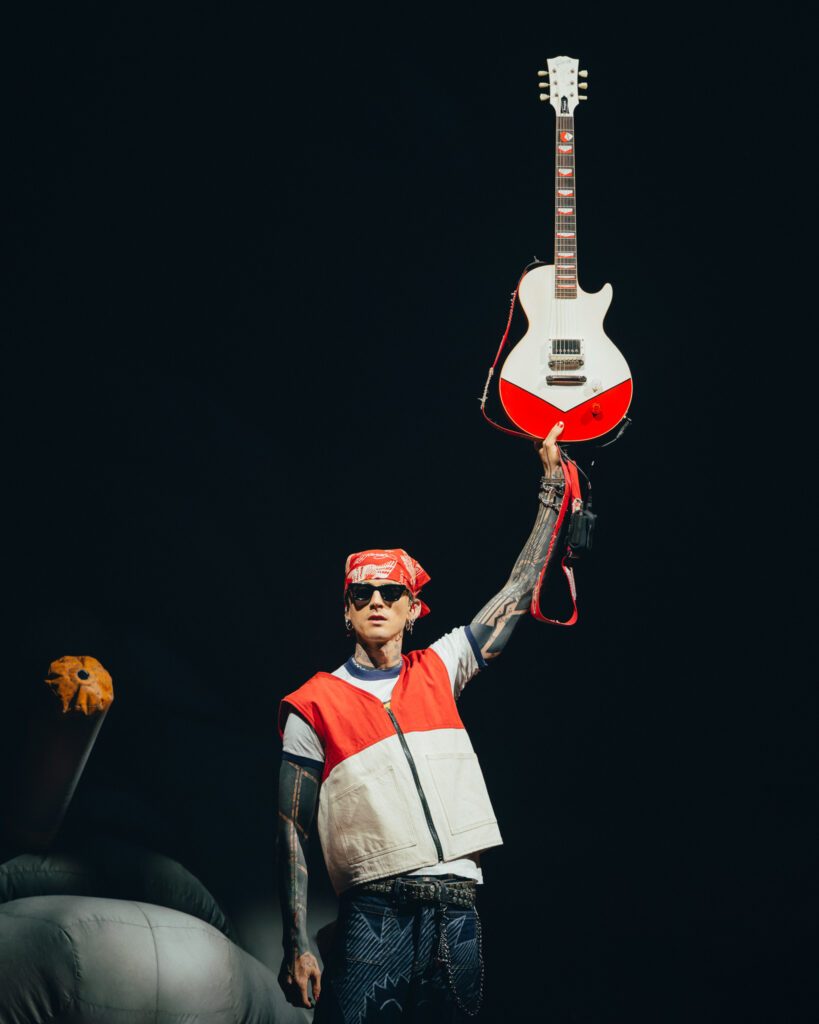
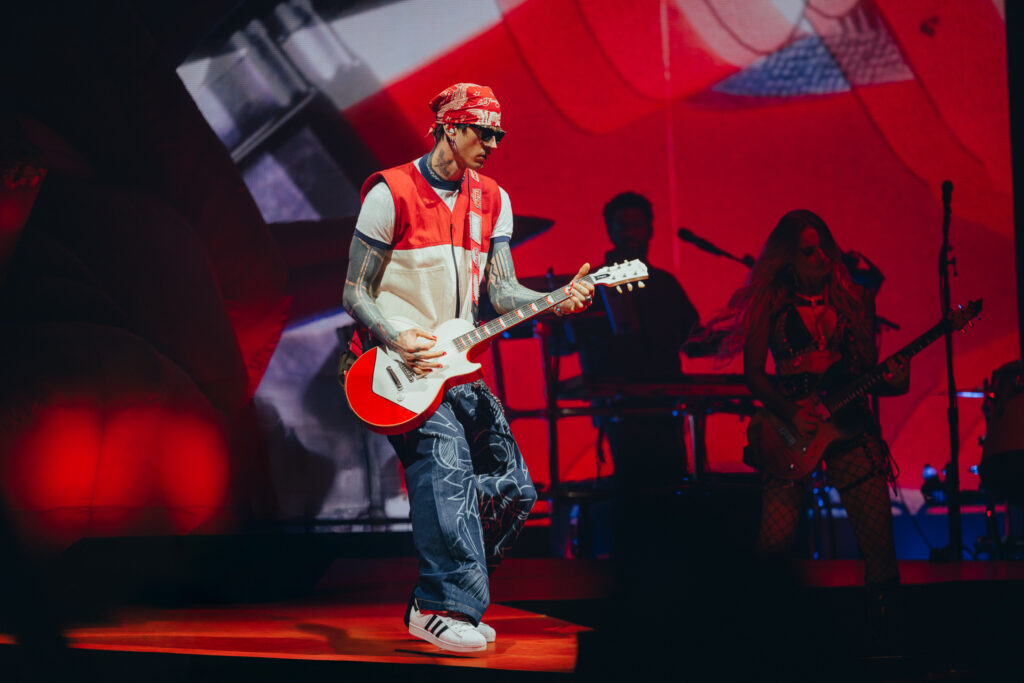
That honesty has become part of MGK‘s appeal. One minute he’s slinging a guitar across his shoulder and leading an arena-sized singalong. A few songs later he’s back in full rapper mode, firing through verses with the confidence that first made his name. Instead of feeling scattered, the shifts felt natural. At this point, the different versions of MGK have stopped competing with one another. They’ve become part of the same artist.
Visually, the show rarely slowed down. Fire erupted across the front of the stage during the heavier songs, dancers filled nearly every transition, and air cannons arrived exactly when they needed to. It would have been easy for the production to overshadow the music, but MGK remained the focal point throughout. He sprinted from one side of the stage to the other, climbed platforms, leaned into the barricade to greet fans, and constantly challenged the audience to match his energy.
One of the evening’s most memorable moments came during “Can’t Stay Here,” when thousands of phone lights illuminated Rogers Arena, transforming the venue into a sea of stars. The massive production suddenly gave way to something quieter, with the audience becoming just as important to the atmosphere as the stage itself
One of the smartest decisions in the set came midway through the show when MGK left the main stage for a smaller platform deeper inside the arena. The production suddenly shrank, replacing explosions with something much quieter. Songs like “Glass House” carried a vulnerability that often gets buried beneath the fireworks. In those moments, Rogers Arena felt surprisingly intimate despite the crowd size.
The emotional swings have become part of MGK‘s identity. He can spend one song encouraging crowdsurfing before turning around to deliver deeply personal lyrics that leave the arena almost silent. It shouldn’t work as well as it does, but somehow it always finds its balance.
There was plenty of humour mixed into the chaos. During “Everything Tatted,” MGK spotted a fan holding a sign announcing she had “FIX UR FACE” tattooed on her backside. The cameras immediately found her, and when she proudly revealed the tattoo, the arena erupted with laughter and applause while MGK could only shake his head in disbelief while smiling.
The covers landed just as well. His version of “Mr. Brightside” instantly became one of the loudest singalongs of the evening, proving that some songs have taken on a life of their own inside concert arenas. It was one of several moments where MGK stepped back and simply let the audience carry the performance.
The celebration continued during “My Bloody Valentine,” when roughly twenty female fans were invited onto the stage to dance alongside him. The standout among them was an energetic six-year-old girl who completely stole the spotlight, confidently dancing across the stage and earning one of the biggest ovations of the night.
Before launching into “My Ex’s Best Friend,” MGK paused to remove his shirt, joking, “I know Canadians can say sorry, but can you please?” as he tried to squeeze a little more noise out of the audience. Judging by the response, they were more than happy to oblige.
What continues to separate MGK from many of his peers isn’t that he blends genres. Plenty of artists do that now. It’s that he fully commits to every version of himself without apologizing for the contradictions. He’s still a rapper. He’s still a rock frontman. He’s still willing to lean into melodic pop songwriting. Rather than smoothing those edges out, the Lost Americana Tour puts them all under the same spotlight.
Closing with “Vampire Diaries,” MGK capped off nearly two hours that rarely lost momentum. Loud, theatrical, emotional, and occasionally chaotic, the show never felt interested in perfection. It aimed for something much more entertaining. Rogers Arena got a performance that embraced every corner of MGK‘s career, delivering a night that felt unpredictable from start to finish.
Whether fans came for the rap records, the pop-punk era, or the newest material, there was very little chance of leaving disappointed. MGK has become one of modern arena rock’s most unpredictable performers, and Lost Americana makes a strong case that his refusal to fit neatly into one genre is exactly what keeps his live shows so compelling.
Check out our favourite photos of the night below or head to our Facebook page for the full gallery!
MGK
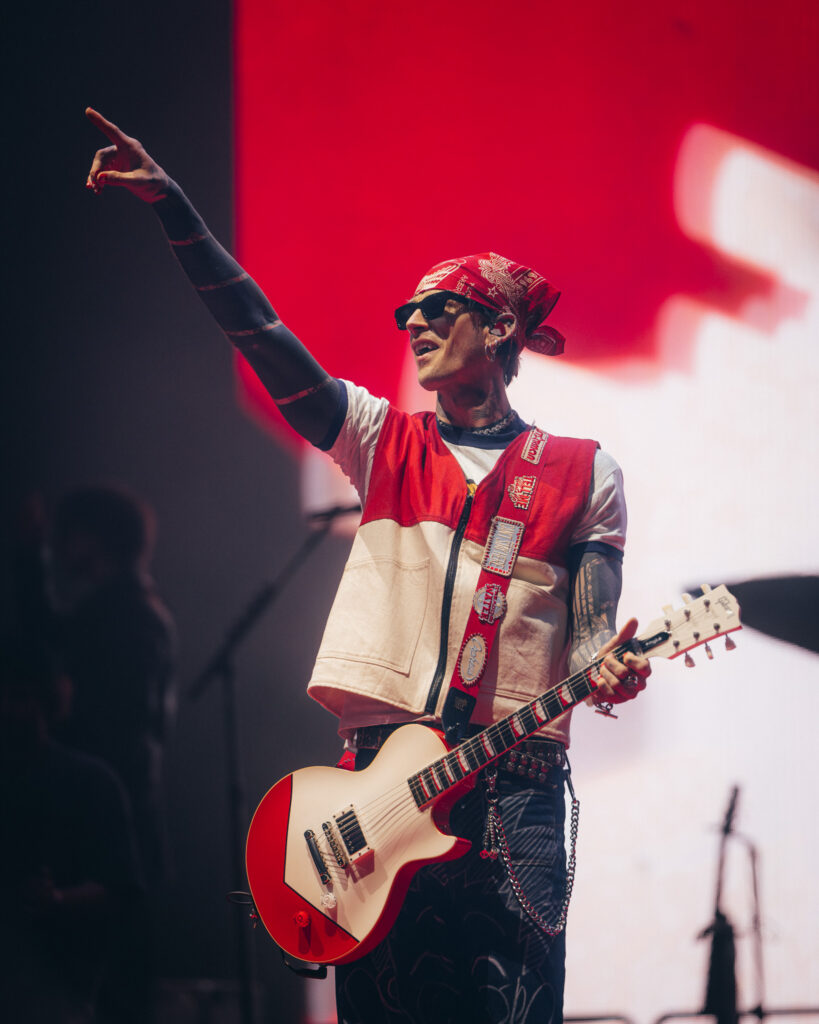
MOD SUN
All Photo Credit: Caroline Charruyer



Concerts Reviews
LIVE REVIEW: aespa Close North American Tour With a Futuristic Spectacle in Vancouver
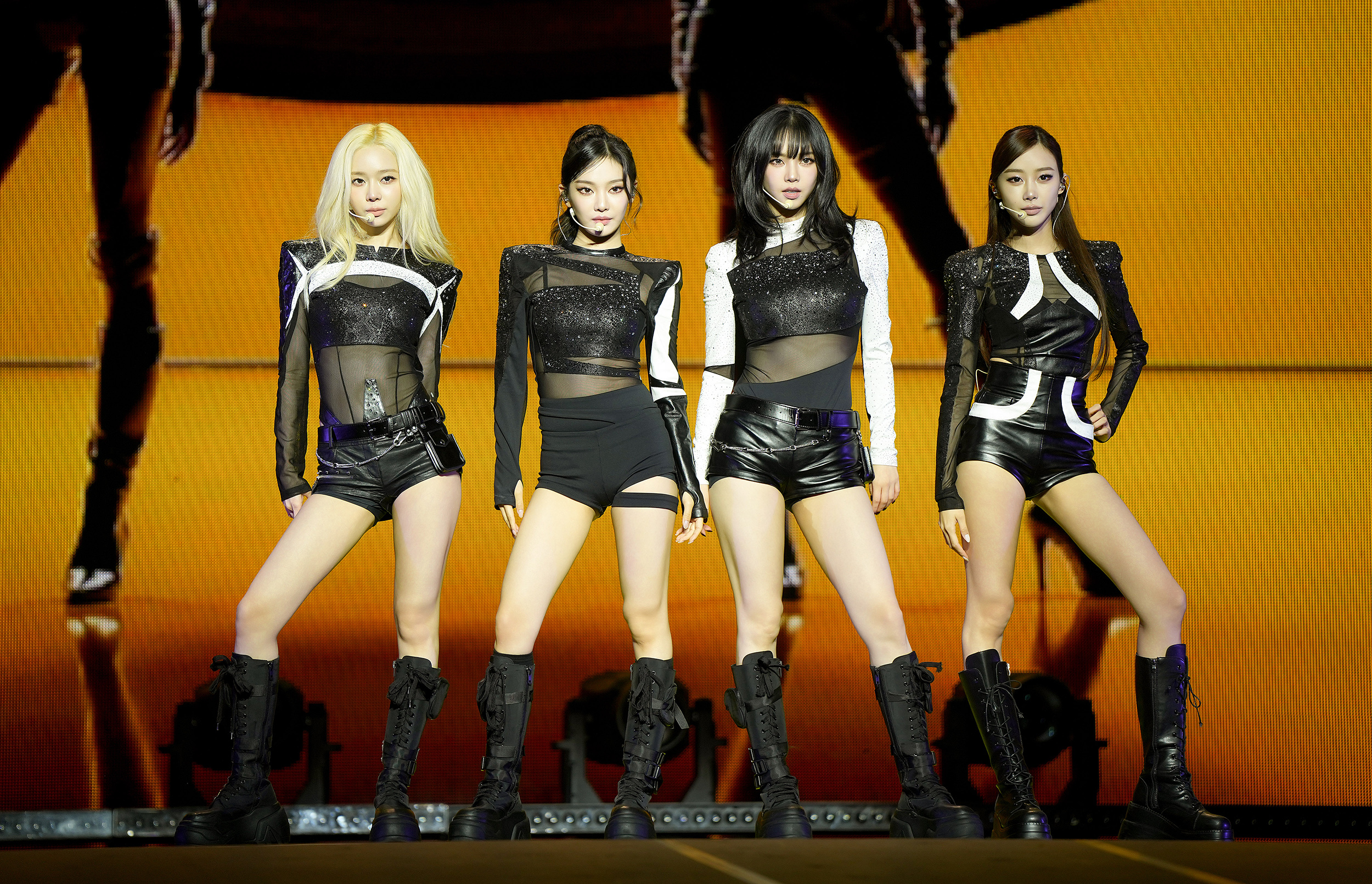
My K-pop education continued on October 11 as aespa brought their SYNK : COMPLæXITY Tour to Rogers Arena in Vancouver. After seeing TWICE in January and IVE in August, this was my third concert foray into K-pop. I was excited to see how aespa would compare, and the answer was a little different from my first two experiences. Where TWICE brought the fun and IVE delivered its own polished pop spectacle, aespa leaned into futuristic visuals, heavy electronic production and choreography that rarely let up.
With no opening act, the stage belonged entirely to Karina, Winter, Giselle and Ningning. Vancouver marked the final stop of the North American leg before the group heads to Europe in January, making this the last chance for fans on this side of the Atlantic to see the production for a while.
There had been some concern about Giselle’s participation after she left the stage five songs into the group’s October 9 show at Climate Pledge Arena in Seattle. Thankfully, she was back in Vancouver. Both she and Winter mentioned having a cold, but you wouldn’t have known it from their performances. Neither appeared to let it get in the way, and both delivered strong performances throughout the night.
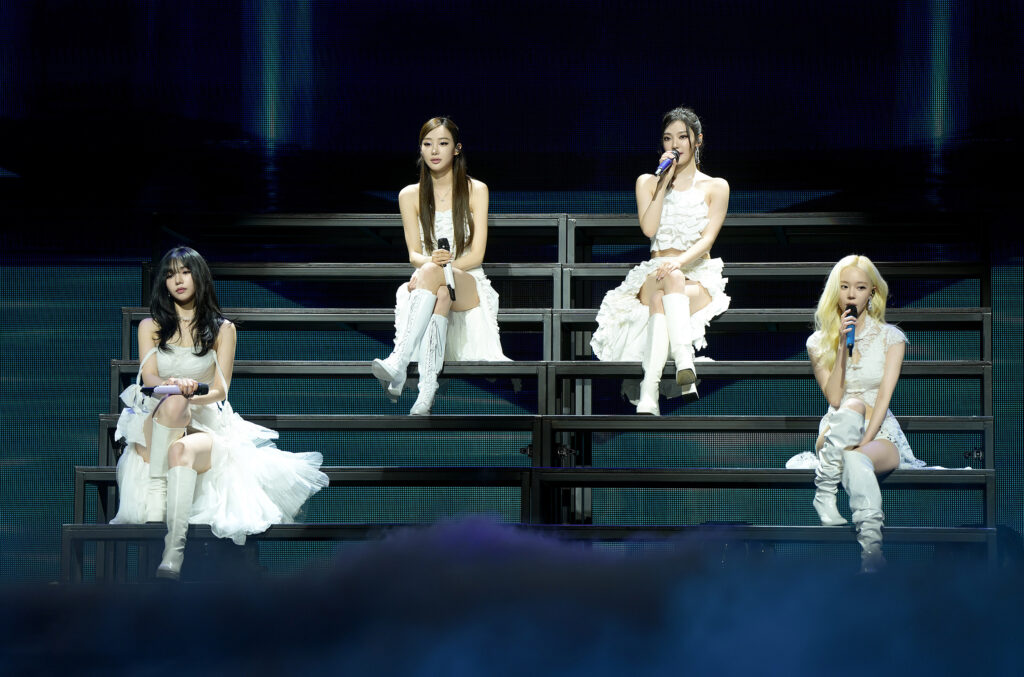
The show opened with “LEMONADE,” immediately filling Rogers Arena with heavy bass, electronic beats and futuristic visuals. The production was massive, but the sound mix occasionally worked against the group. At points, the bass threatened to overpower the vocals, which was frustrating when four singers this capable were onstage.
“Switchblade” and “Whiplash” kept the momentum going before aespa reached back to its 2020 debut single, “Black Mamba.” The choreography remained sharp, and the group’s ability to move between demanding routines and vocal passages without losing its composure was impressive. “WDA (Whole Different Animal)” brought a harder hip-hop edge, with Giselle’s rap standing out against the heavy production.
The concert was divided into five acts, with cinematic video segments building on the group’s fictional universe. The story occasionally felt like a lot to keep up with, particularly for someone who hasn’t followed every chapter of aespa‘s mythology. Still, the visuals gave the show a clear identity. The production had a narrative thread running through it.
The second act offered a welcome change of pace. Karina introduced “Count on Me” on a piano, leading into a softer arrangement that let the members’ voices take centre stage. “Camouflage” and “Angel #48” continued the dreamier stretch. These moments were a reminder that aespa doesn’t need a wall of bass and flashing screens to hold an audience’s attention.
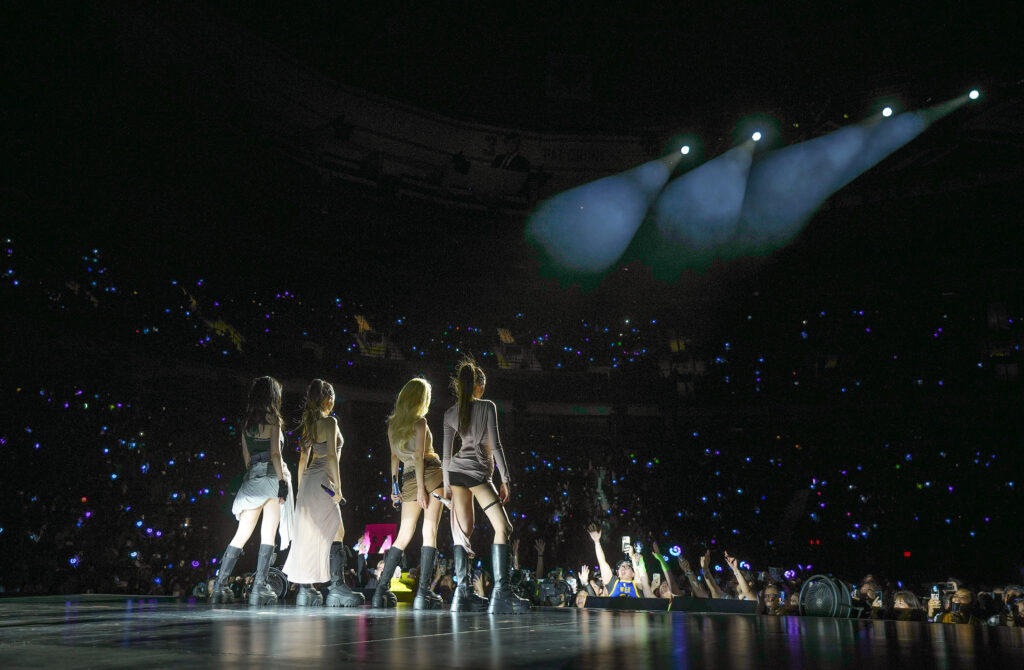
The solo and duet stages were among my favourite parts of the night. Giselle and Ningning brought a relaxed feel to “Lollipop,” while Karina and Winter took a more energetic approach with “Serenade.” Each pairing had its own character, making the performances feel distinct rather than like variations on the same routine.
The four solo performances gave the members even more room to show what they could do. Ningning’s “I Love You But I Gotta Let You Go” built from restrained verses into soaring high notes, while Karina’s “16 Bit” relied on a more understated, moody delivery. Giselle showed a softer side on “BYEB4HELLO,” moving beyond her usual rap role, and Winter’s “Saddle Up” put her choreography and stage confidence front and centre.
These performances made a strong case for the individual personalities within aespa. The group’s sleek, coordinated image is part of its appeal, but seeing the members step outside that format made the concert more interesting.
The heavier material returned with “Armageddon” and “Bite,” followed by a run of choreography-driven performances including “Next Level,” “SHAKIN’” and “Supernova.” The dancers added scale to the show, and the synchronized routines looked particularly effective against the digital scenery. By this point, the production had made its point: aespa knows how to turn its music into a full arena experience.
The pre-encore dance challenge was a fun change of pace, with cameras scanning the crowd and giving fans a chance to show off their moves on the big screens. The segment ended with an (shy) audience singalong to “Roll” before aespa returned for “Yeppi Yeppi” and “’Til We Die.”
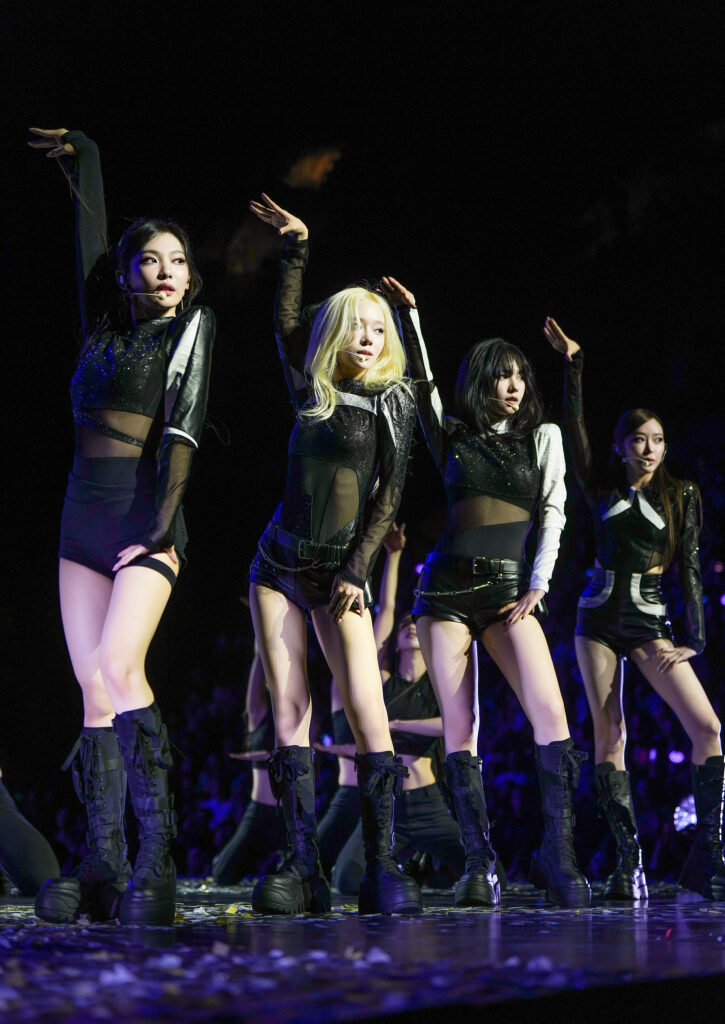
As someone still getting to know K-pop, I appreciated the range. The spectacle was impressive, but the quieter songs and individual stages stopped the night from becoming one long sensory overload. The sound mix could have been better, and some of the storyline went over my head, but those were minor complaints in a show packed with strong performances.
TWICE got me curious about K-pop, and IVE gave me another reason to keep exploring it. aespa made a convincing case for sticking around. Their Vancouver show was loud, visually striking and full of personality, with four performers who could hold Rogers Arena’s attention even when the production threatened to steal it. That’s a solid way to close out a North American tour.
Upcoming Aespa – SYNK : COMPLæXITY’ World Tour Dates:
01/14 – Manchester, United Kingdom @ AO Arena
01/16 – London, United Kingdom @ The O2
01/19 – Amsterdam, Netherlands @ Ziggo Dome
01/22 – Stockholm, Sweden @ Avicii Arena
01/24 – Copenhagen, Denmark @ Royal Arena
01/26 – Berlin, Germany @ Uber Arena
01/29 – Milan, Italy @ Unipol Dome
01/31 – Barcelona, Spain @ Palau Sant Jordi
02/02 – Paris, France @ Accor Arena
More information here.
Concerts Reviews
LØLØ Brings her ‘God Forbid a Girl Goes on Tour’ to the Pearl in Vancouver
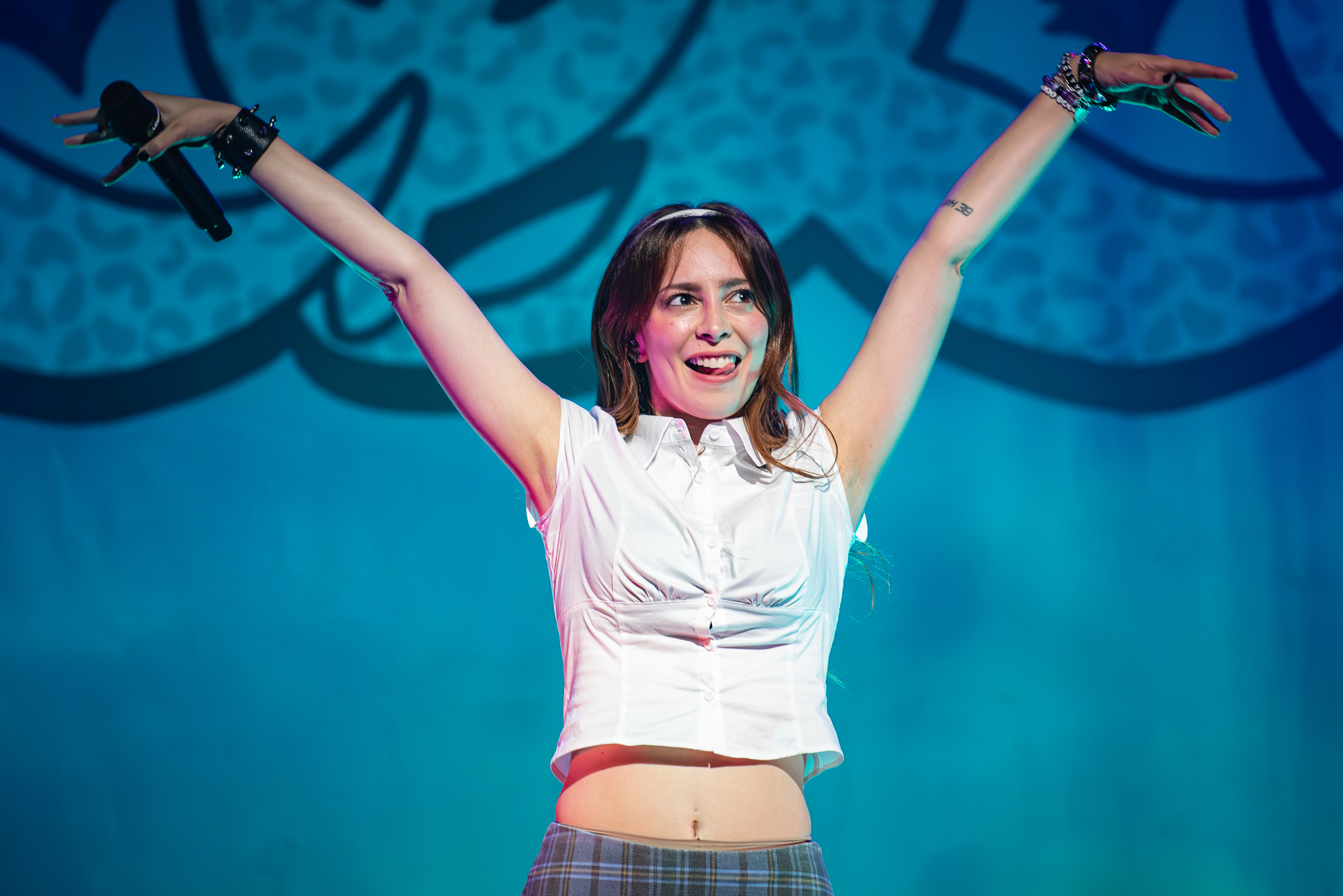
LØLØ brought her second headlining tour – aptly named “God Forbid a Girl Goes on Tour” – to Vancouver this week, a first for the Canada-born artist. We’ve been a fan since we first heard “Death Wish” back in 2021, which seems like it was yesterday, and we aren’t going to overthink that right now. That being said, we’ve been waiting a long time for this night, and what a show!
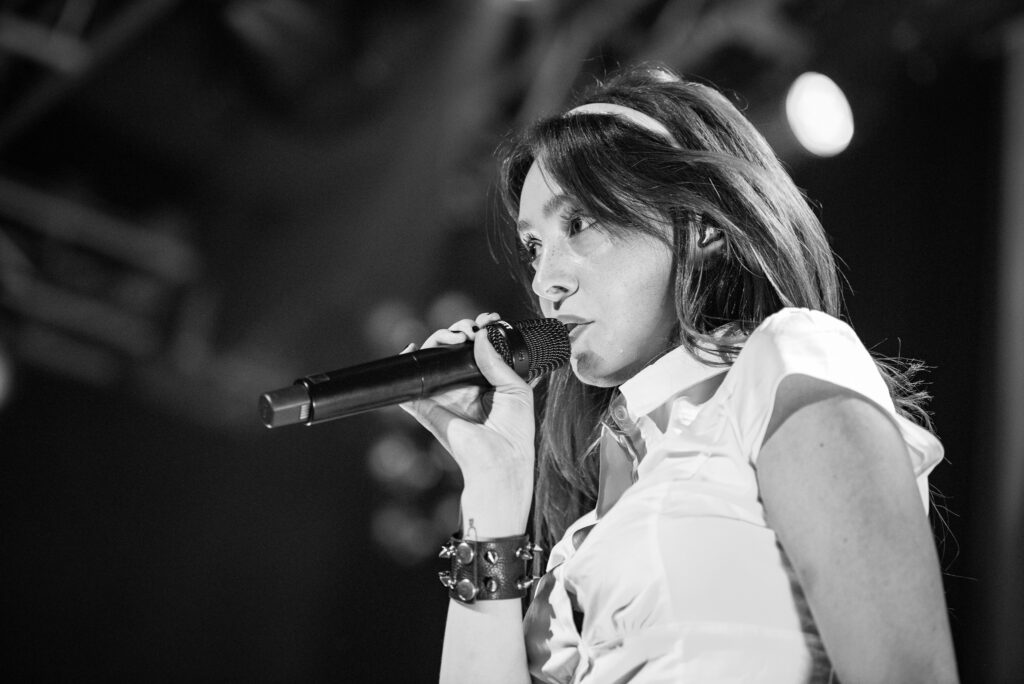
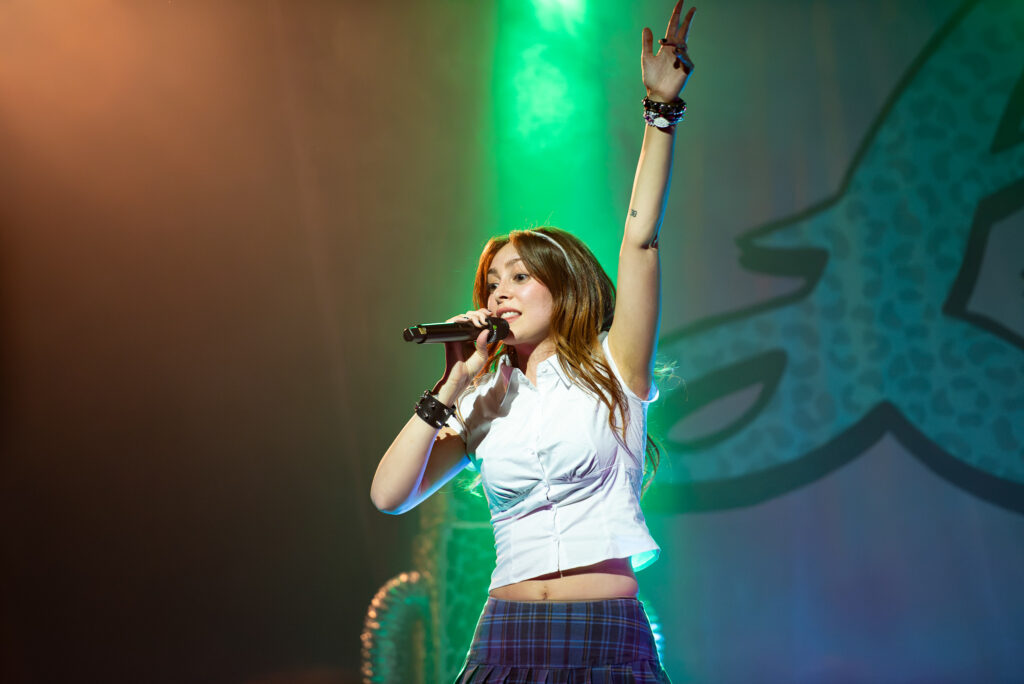
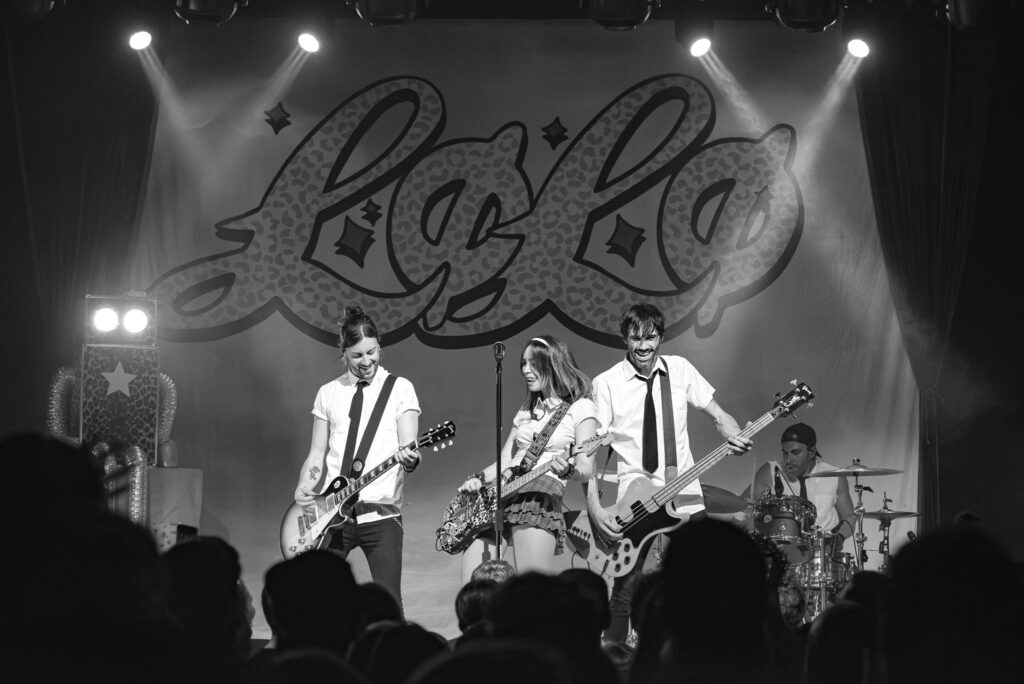
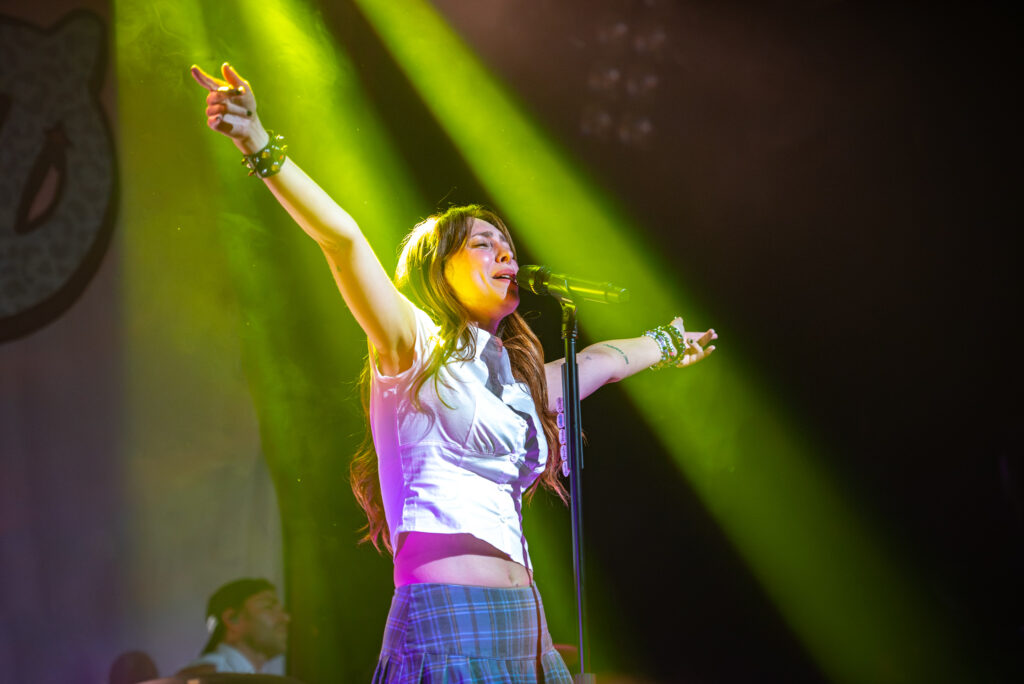
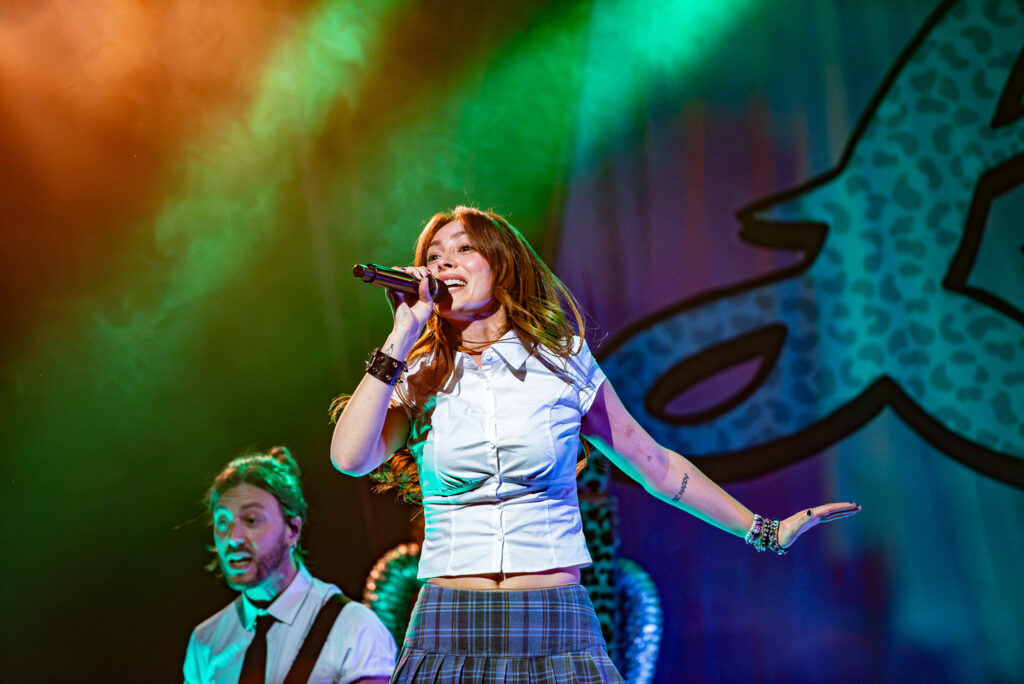
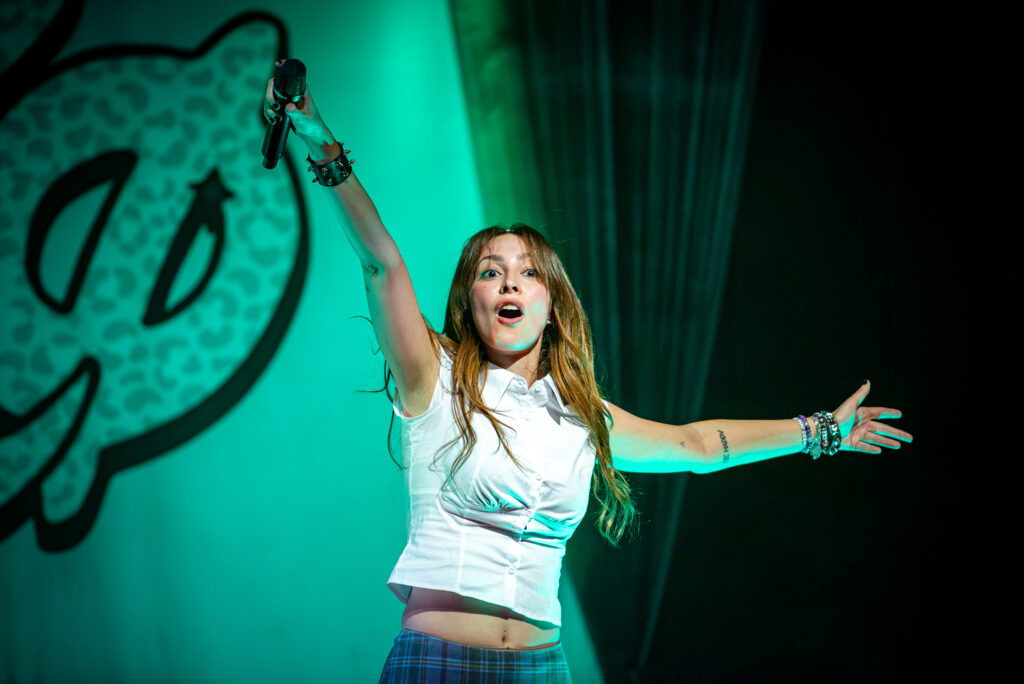
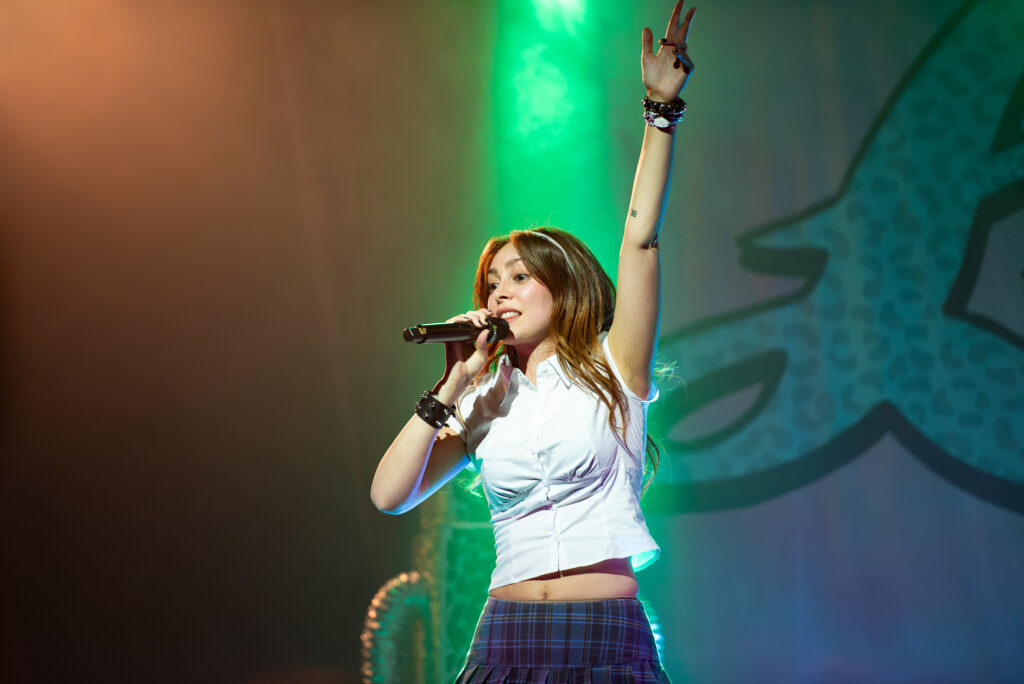
We’ve been frequenting The Pearl more and more lately, and like so many others this show was sold out and packed wall-to-wall. There was a small mob for the first opener of the night, Dawson Gamble, and the floor was packed by the time Con the Artist took the stage. When LØLØ appeared, it was all plaid miniskirts and devil horns from the stage to the merch booth.
When the lights went down, LØLØ’s voice boomed over the speakers, narrating excerpts from a journal. LØLØ is not a choreographed, over-polished pop princess. Like so many artists that grew their audience from nothing, she does her best to connect with individuals in the audience. She takes her time, holds their hands, and during one memorable song, brings them on stage to dance.
“I think that people don’t want perfection,” she told Rolling Stone earlier this year. “They just want to see a live show and a special moment.”
LØLØ was very upfront about her adventures online, finding her voice, and time spent during COVID, and from the vibe you have to assume the audience had been there with her the entire time. From “The Floor is Lava” to “Faceplant,” all the hits were covered and sung along to. Speaking of which…
Must Hear Songs by LØLØ (In Our Humble Opinion):
• “death wish” (Single, 2021)
• “Hot Girls in Hell” (falling for robots, 2023)
• “u turn me on (but you give me depression)” (falling for robots, 2023)
• “Let It Go” (A Whole New Sound (Disney), 2024)
Fun fact: LØLØ was featured on a 2024 Disney punk album alongside Simple Plan, Magnolia Park, and Yellow Card, to name a few iconic bands. Check out her version of “Let It Go” from “Frozen.” It’s unexpected and a lot of fun.
LØLØ ‘s first moment of viral fame was her cover of “Hey There Delilah,” updated and sung from Delilah’s perspective. Pulling Con the Artist back on stage for a duet gave the crowd a wonderful, heartfelt moment that was honestly quite touching. Not everyone’s favorite song, but a lovely moment for everyone in the audience.
LØLØ, with several incredible songs in her library and with a stack of “Warped Tour” appearances already in the books, seems poised to breakthrough to the next level. She’s electric on stage, and animated, and we can only dream of the day she is given more space to play. Until then, another highlight concert of 2026, and something to think about until her next visit!
LØLØ Setlist:
• the devil wears converse
• pretty little wreck
• god forbid a girl spits out her feelings!
• THE FLOOR IS LAVA!
• debbie downer
• me with no shirt on
• the punisher
• 2 of us
• u turn me on (but u give me depression)
• faceplant
• Hey There Delilah
• death wish
• delusional darling
• junkie
• DON’T!
• dumbest girl in the world
• wish i was a robot
• hot girls in hell
Check out our favourite photos of the night below or head to our Facebook page for the full gallery. Thanks for attending the show with us and for checking out our review!
LØLØ
All Photo Credit: Jason Martin